Pediatric PCD Franchise vs Other Pharma Niches: Which Is More Profitable?

Top Letrozole Tablet Brands in India
June 8, 2026
Ayurvedic PCD Franchise: Investment, Margins & Profit Potential Explained
July 2, 2026Pediatric PCD Franchise vs Other Pharma Niches: Which Is More Profitable? – PCD Pharma Franchise is receiving immense recognition in India. The main question that is on everyone’s mind is which niche to go for. The pharmaceutical landscape is cluttered with too many options and too many claims, and yet no clear answers.
Cardiac, Diabetic, Cosmetic, Derma, General – every segment is recognized to be most profitable, but among these, one segment that rarely gets the attention it deserves and is the most profitable is the Pediatric PCD Franchise. Pediatrics holds a strong foundation in the pharma franchise business, with continuous demand and premium-grade formulations across the pharmaceutical realm.
Medfenec Labs provides an in-depth analysis of a Pediatric PCD franchise compared to other pharma niches on the key metrics that count: investment, profit margins, customer retention, and long-term viability so that you make your decision based on facts and figures, not persuasive words.
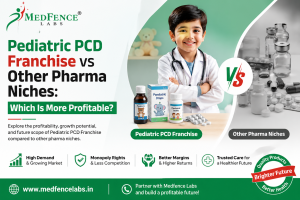
Explore: Why Is Pediatric Pharma a Distinct Niche?
Pediatric pharma serves a market segment with unique, mostly non-negotiable demand. A few structural reasons why this niche behaves differently from others are mentioned as follows:
Constant Demand – The children get sick regardless of economic conditions, and parents rarely delay treatment. Hence, the growth in Pediatric Pharma Distribution Franchise business and constant demand for the best quality of medications all over the country.
Less competitive Saturation – Other pharmaceutical categories like general antibiotics or pain management are highly competitive, with a large number of participants. The pediatric pharmaceutical categories are relatively less concentrated.
Recurring Purchase Cycle – Tablets, injections, vaccines, cough syrups, and other supplements are purchased regularly, resulting in a constant repurchasing cycle of products.
Long-Term Growth Opportunities – The expanding focus on preventive healthcare and pediatric wellness supports sustained growth in this specialized pharmaceutical niche.
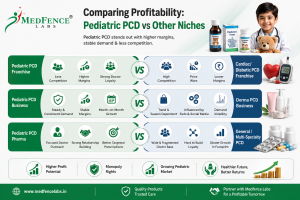
Comparing Profitability: Pediatric PCD vs Other Niches
Here’s how pediatric PCD compares against three commonly chosen niches, based on typical industry patterns.
Pediatric PCD Franchise vs Cardiac/Diabetic PCD Franchise
For cardiac and diabetic PCD, lifelong chronic medicine regimens are common. This sounds ideal for patients, but it is the most strongly contested area in pharma because of the presence of major brand names. This often leads to price wars amongst major players, resulting in low margins for the franchisee. Pediatric PCD, on the other hand, has far fewer players battling for the same pie, allowing franchisees to maintain higher margins.
Pediatric PCD Business vs Derma PCD Business
Aesthetic Derma franchises make handsome margins but are sensitive to trends. Their demand is highly influenced by skincare fads, seasonal changes and the ever-changing dynamics of social media, making it inherently volatile. Pediatric demand is driven by the needs of patients rather than seasonal whims or trending fashions. This ensures consistent month-on-month sales performance for Pediatric PCD Pharma franchisees.
Pediatric PCD Pharma vs General/Multi-Specialty PCD
A general multi-specialty PCD business offers a wide range of products but requires the distributor to cater to diverse segments of doctors. In such a fragmented market, building doctor-patient loyalty and establishing a firm footprint with well-defined doctor segments can be a challenge. A more specialized pediatric PCD business allows a distributor to build concentrated relationships with a selected pool of pediatricians and well-known Pediatric clinics.
Here’s how pediatric PCD compares against three commonly chosen niches, based on typical industry patterns.
| Factor | Pediatric PCD | Cardiac/Diabetic PCD | Derma PCD | General/Multi-Specialty PCD |
|---|---|---|---|---|
| Initial Investment | Low–Moderate | Moderate–High | Moderate | Low–Moderate |
| Average Margins | 20–30% | 15–22% | 18–25% | 12–18% |
| Repeat Order Frequency | High (recurring illnesses, growth-stage products) | High (chronic, lifelong medication) | Moderate (seasonal, cosmetic-linked demand) | Variable, depends on product mix |
| Market Saturation | Low–Moderate | High (many established players) | High (heavily contested, especially cosmeceuticals) | High (broad but shallow competition) |
| Prescriber Base Stability | High (limited, loyal pediatrician pool) | High (specialists, but fewer in number) | Moderate (dermatologists + general practitioners) | Low–Moderate (fragmented across specialties) |
| Regulatory Complexity | Moderate–High (strict dosing/formulation norms) | Moderate | Low–Moderate | Moderate |
| Growth Trend | Rising steadily | Rising, but crowded | Rising, trend-driven | Stable, slower growth |
Key Profitability Factors Specific to Pediatric PCD
The pediatric PCD pharma franchise model is quite profitable on account of the continuous demand for children’s medicines and special products. An ever-growing healthcare consciousness and a shift towards quality pediatric products by both rural and urban Indian families.
- There is a constant market for pediatric medications due to children’s consistent demand, which requires daily attention. These needs stem from common problems, seasonal infections, and nutrition support.
- A wide product mix, including syrup, drops, and other dietary supplements, caters to multiple therapeutic indications.
- With increased awareness regarding immunity building in children and their nutritional and developmental needs, demand for pediatric pharmaceuticals has seen a significant rise across India.
- Child-Friendly Formulations Products such as flavored syrups, easy-to-administer drops, and liquid oral formulations have been well accepted by parents, caregivers, and doctors as they enhance compliance and adherence to treatment.
- In comparison to general segments in pharma products, the pediatric segment offers less market competition to PCD partners.
Who Should Choose a Pediatric PCD Franchise Business?
A pediatric PCD franchise business is a great opportunity for people who want to enter the pharmaceutical industry with a specialized and growing product category.
Ideal for entrepreneurs, distributors, medical representatives, and healthcare professionals who want to build a profitable business and contribute to better child healthcare with quality pediatric medicines.
- A first-time PCD investor looking for a consistent and steady income over high-reward sectors.
- A distributor located in tier 2 and tier 3 cities, where the competition is not yet so fierce. Where building relationships with prescribers is still relatively simple.
- Someone seeking long-term sustainable income with consistent repeat purchases as opposed to speculative, short-term, trend-driven sales.
Partner with Medfence Labs for Long-Term Pediatric PCD Success
If the numbers are in favor of pediatric PCD, then the next step would be to find the right manufacturer. Medfenec Labs provides a complete line-up of pediatric products from syrups to sachets and nutritional supplements, manufactured following quality-controlled processes.
By partnering with us, you will get monopoly territory, assistance with promotional and marketing support materials, and a constant supply of products, essential for translating your margins on paper to actual profit.
When it comes to investing in PCD, it is important to partner with companies that specialize in this particular sector, as opposed to those that include it in their vast catalog.
Conclusion
Pediatric PCD franchises have had more repeat orders, brand loyalty from doctors, and less competition in the market as compared to cardiac PCD, derma PCD, and general PCD. This ensures safer and more sustainable profit margins, but with a slightly increased regulatory standard. Investors looking at the pharmaceutical franchising space should pay close attention to pediatric PCD rather than considering it as a secondary option.